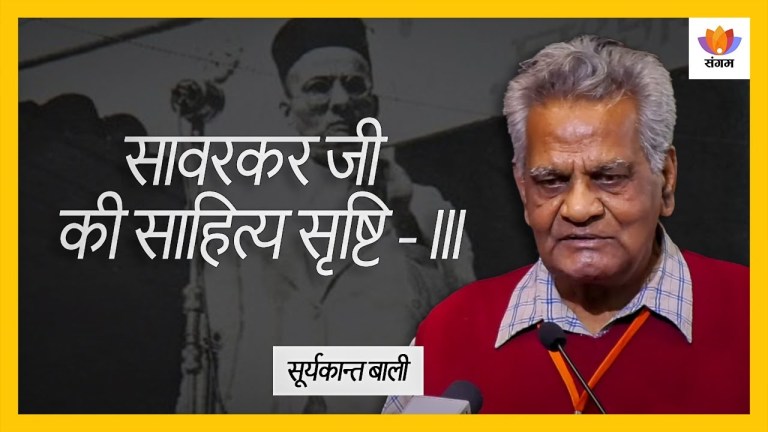
In a thought-provoking video titled “The Buddha and Equality: Ambedkarism vs Primary Sources,” Dr. Koenraad Elst engages in a profound exploration of the concept of equality within Buddhism. The central theme of his discussion revolves around the contrasting perspectives presented by Ambedkarism and insights derived from primary sources, shedding light on the Buddha’s original teachings. Dr. Elst initiates the discourse by delving into the core notion of equality as perceived in Ambedkarism. According to this perspective, the Buddha is portrayed as an advocate for egalitarianism, with Buddhism being seen as a tool for social reform, particularly addressing the interests of the Dalit castes.
The discussion extends to Siddhartha Gautama, the Buddha’s birth name, and his background. Dr. Elst highlights Siddhartha’s elite status as the raja of the Sakya republic. Despite his advantageous position, Siddhartha chose a path of renunciation, becoming a sage instead of a ruler. Dr. Elst explores the democratic nature of ancient Indian republics, emphasizing the complexities of socio-political structures during the Buddha’s era. The narrative also touches upon the Buddha’s role in advising on political matters within the Sakya republic and later when organizing his monastic order, the Sangha. Dr. Elst contends that projecting modern ideas of democracy and equality onto ancient times may oversimplify the socio-political structures prevalent during the Buddha’s era.
A critical aspect of Dr. Elst’s discussion involves the perceived divergence between the original teachings of Buddhism and its shaping in modern India, particularly in the context of social reform. He argues that Buddhism, as embraced by Dr. Ambedkar in 1956, has been influenced by a focus on caste equality, which may not entirely align with the core principles of Buddhism as expounded by the Buddha over 2,500 years ago.

![Read more about the article [Q/A] Hindu Masjids: The Problem & Solutions — A Talk By Prafull Goradia](https://sangamtalks.org/wp-content/uploads/2019/10/hqdefault-4.jpg)