Sanskrit has a genre of robot stories so extensive it’s been identified as its own literary category — and it may be the ideal language for artificial intelligence.
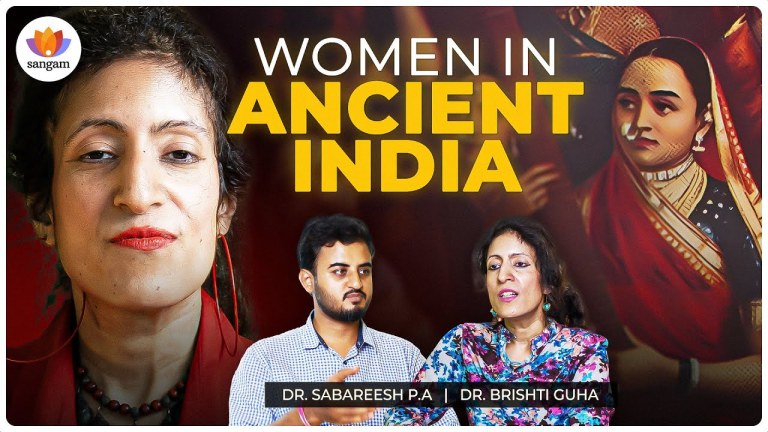
Dr. Brishti Guha returns to Sangam Talks to make the case for Sanskrit’s extraordinary contemporary relevance across three dimensions: literature, history of science, and modern AI. On literature: Sanskrit has a wealth of novels, plays, and poems — including the Dasakumar Charitam, Bhavabhuti’s Uttaramacharita (featuring a woman student travelling alone in search of a better education), and an entire genre of robot stories so extensive that scholar Signe Cohen called them a distinct genre in Sanskrit literature.
On AI: The Paninian grammar system’s algorithmic precision — structured exactly like a computer’s rule-following logic — is matched by Sanskrit’s unique property that word order does not change sentence meaning, making it exceptionally suitable for natural language processing. The Arabs who transmitted our numerals called them “Hindu numerals” (Al-Khwarizmi’s book was titled On Computation Using Hindu Numerals); the West later erased the attribution. Sanskrit, the episode argues, is not a dead language — it is a living infrastructure for the civilisational future.
About the Speakers:
Dr Brishti Guha has a PhD in economics from Princeton. She studied at St Stephen’s College and JNU and is currently an associate professor at the School of International Studies, JNU. Besides publishing in international academic journals, she publishes regularly on themes related to ancient India in the popular press. Her translations from Sanskrit literature and her essays have also appeared in a number of popular international magazines.
Dr Sabareesh P.A. is a writer and author of ‘A Brief History of Science in India’, ‘Our Hindu Nationhood’ and a PhD from Jawaharlal Nehru University, New Delhi with wide academic interests.