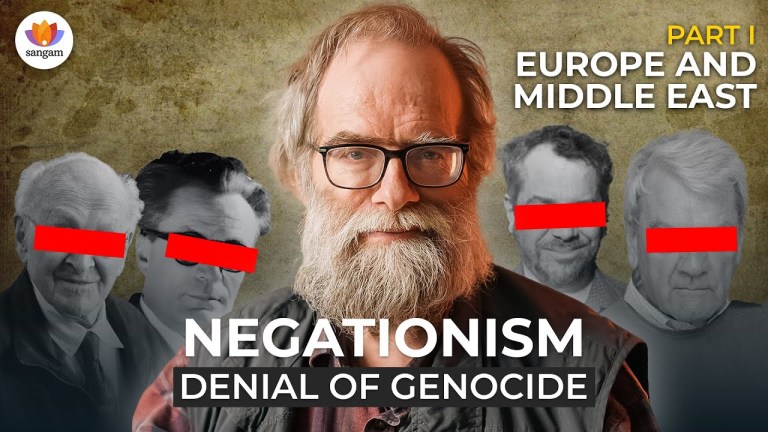
In the West, denying the Holocaust is social suicide. In India, denying the Islamic genocide of Hindus is a career-making move. Dr. Koenraad Elst delivers a searching analysis of how the techniques of historical negationism developed in 20th-century Europe have been adapted and applied to systematically erase the memory of Islamic violence against Indian civilisation.
He traces a thousand years of Islamic conquest in India — from the first naval invasion in 636 CE through Mohammed bin Qasim, Mahmud Ghaznavi, Timur, Babur, Aurangzeb, and Tipu Sultan, to the partition massacres of 1947 and the Bangladesh genocide of 1971 — identifying the common ideological thread that connected these events across centuries and rulers, including India-born ones like Malik Kafur and Tipu Sultan.
His central point is historiographic: while European negationism of the Holocaust is socially unacceptable, the denial of Hindu suffering is institutionally rewarded in Indian academia. He calls for precise use of language — “genocide” has a specific legal meaning, and not all mass killings meet that threshold — and for systematic scholarly work to document what actually happened with the rigour that will withstand critical scrutiny.
About the Speaker
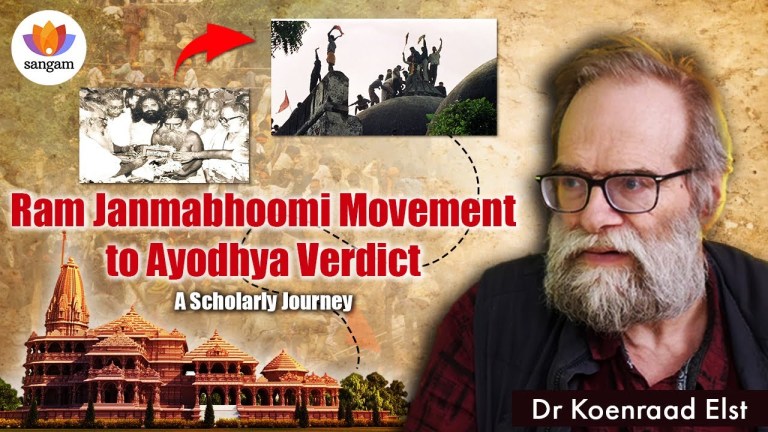
Dr. Koenraad Elst is a prominent Belgian Indologist, historian, and author, recognized for his extensive research on Indian history, culture, and religion. Elst’s academic background includes a Master’s degree in Sinology, Indology, and Philosophy from the Katholieke Universiteit Leuven. He furthered his studies, earning a Ph.D. in Oriental Studies from the University of Leuven. Elst’s interest in India’s communal issues began during his time at the Benares Hindu University, leading to his first book on the Ayodhya conflict. He has established himself as a columnist for Belgian and Indian newspapers, frequently travelling to India for research. He has authored over two dozen books and numerous articles, delving into topics such as Hindu nationalism, multiculturalism, and the Aryan invasion theory. His works often challenge prevailing narratives and offer alternative perspectives backed by meticulous research and analysis. Despite addressing controversial topics, he maintains a balanced and scholarly approach, grounded in empirical evidence .