In this talk, Koenraad Elst delves into the contentious topic of Hindu genocide and negationism in India. It begins by examining instances of mass slaughter in India and debates whether these events constitute genocide. The discussion delves into the terminology surrounding these atrocities, considering terms describing Hindu experience like “Hindu Jansanghar” or “Hindu Vanshvichedna” etc instead of holocaust or genocide. It also addresses the phenomenon of denial within India, exploring the factors driving it, including the fear of Hindus seeking revenge for the atrocities and also the Hinduphobia prevalent in society. The conversation also highlights disinformation techniques employed to distort historical narratives. Critically, the talk scrutinizes the role of certain segments of Hindu society in perpetuating negationist narratives and examines the need for a thorough overhaul of textbooks to present a more accurate historical account. Koenraad Elst offers potential solutions to address the issue, emphasizing the importance of acknowledging and confronting historical truths. Finally, the eminent personalities connected to the issue are discussed, whose perspectives and actions have shaped the discourse surrounding Hindu genocide and negationism in India.
Negationism – Denial of Genocide (Part 1) Europe and Middle East | Dr. Koenraad Elst
About the Author
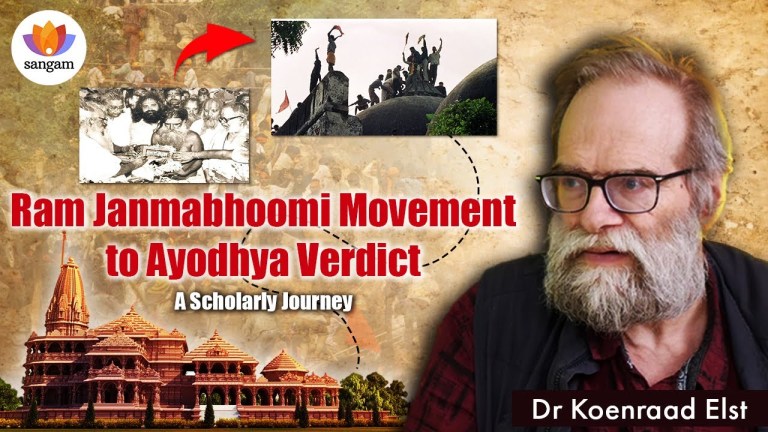
Dr. Koenraad Elst is a prominent Belgian Indologist, historian, and author, recognized for his extensive research on Indian history, culture, and religion. Elst’s academic background includes a Master’s degree in Sinology, Indology, and Philosophy from the Katholieke Universiteit Leuven. He furthered his studies, earning a Ph.D. in Oriental Studies from the University of Leuven. Elst’s interest in India’s communal issues began during his time at the Benares Hindu University, leading to his first book on the Ayodhya conflict. He has established himself as a columnist for Belgian and Indian newspapers, frequently travelling to India for research. He has authored over two dozen books and numerous articles, delving into topics such as Hindu nationalism, multiculturalism, and the Aryan invasion theory. His works often challenge prevailing narratives and offer alternative perspectives backed by meticulous research and analysis. Despite addressing controversial topics, he maintains a balanced and scholarly approach, grounded in empirical evidence and logical argumentation.